Hybrid work did not make office coffee less important. It made demand less predictable. Tuesday may feel like a full office, Friday may be quiet, and a client meeting can empty the brewer faster than an average attendance report suggests.
A good coffee program should follow those patterns without leaving the breakroom overstocked. The fix is not simply buying less coffee. It is choosing equipment, package sizes and delivery intervals that can flex with the people actually using them.
Map attendance by day and peak period
Start with several representative weeks. Record typical attendance Monday through Friday, important meeting days and the hours when coffee demand peaks. Include visitors and teams that use the office only for scheduled collaboration.
A 150-person company with 60 people present most days should not automatically receive equipment sized for 150 constant users. But a brewer that barely serves 60 can still fail during an all-hands meeting. Share both the normal level and the predictable surge.
Choose equipment that handles variation
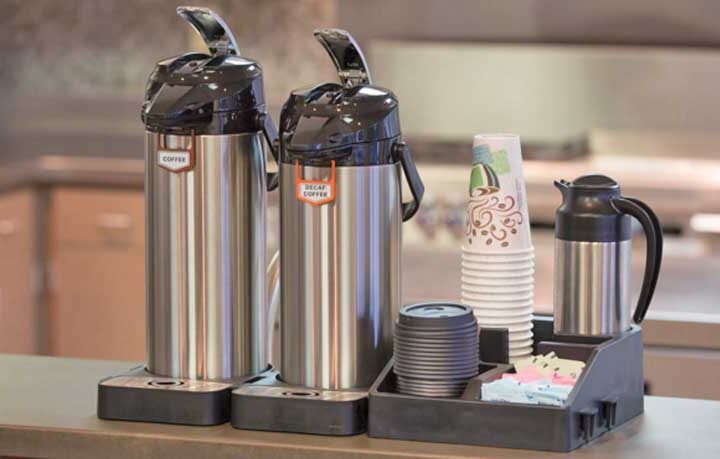
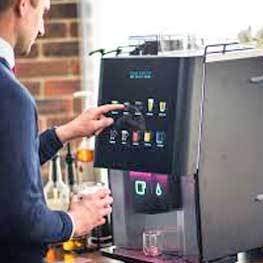
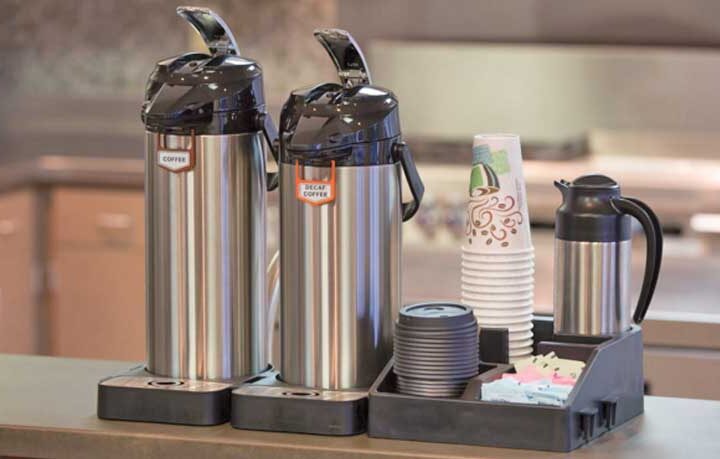
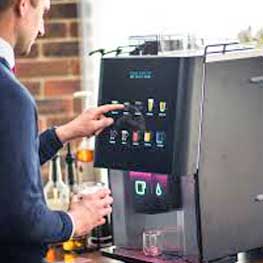
Traditional commercial brewers work well when groups arrive together and coffee is consumed by the pot. Single-cup and bean-to-cup systems reduce leftover coffee and offer more drink variety, though cost per serving, cleaning and peak throughput need attention.
Some workplaces use a combination: a fast batch brewer for busy mornings and a single-cup option for quieter periods or specialty drinks. The right answer depends on how quickly employees need service and who will handle routine cleaning.
Control freshness with package sizes
Large cases and bulk supplies can look economical until products sit through several quiet weeks. Match pack sizes to actual turnover, especially for creamers, milk products and specialty ingredients. Store reserve inventory in a clean, dry space and rotate it by date.
Ask the provider to adjust par levels by weekday demand. A New Jersey office that fills up Tuesday through Thursday may need delivery or restocking timed before that peak rather than after it.
Make product choices easy to manage
Keep a dependable core of regular, decaf and one or two preferred specialty options. Too many rarely used choices increase clutter and expiration risk. Employee surveys are useful, but purchasing data after launch is more reliable than stated preferences.
Include tea, cocoa and cold beverage needs in the same plan. Not every employee drinks coffee, and a complete service should support the broader breakroom without turning every request into a separate delivery.
Review the program on a schedule
Hybrid patterns change with hiring, policy and season. Review usage at least quarterly and after major attendance changes. Look at servings, delivery quantities, emergency orders, expired products and service calls.
- Reduce slow products before reducing core availability
- Increase delivery ahead of known meeting cycles
- Reevaluate brewer capacity when wait times grow
- Confirm cleaning tasks are actually being completed
- Compare cost per consumed serving, not ordered case
Frequently asked questions
What headcount should a hybrid office use for quotes?
Provide typical attendance by weekday, peak attendance and total employees. That gives providers a more accurate picture than one number.
Does single-cup coffee reduce waste?
It can reduce leftover brewed coffee, but pods, ingredients and cost per serving should be included in the comparison.
How often should coffee be delivered?
Delivery should follow consumption, storage space and product shelf life. Hybrid offices often benefit from flexible par levels rather than a fixed large order.
Can a service plan change after installation?
Usually. Confirm how equipment, products and delivery frequency can be adjusted and whether contract changes carry fees.
Tell us which days your team is in the office and compare coffee service quotes built around the way your workplace now operates.