Bottled Water Delivery
Sealed bottles are delivered on a schedule and used with a cooler. This avoids a permanent water-line connection but requires storage for full and empty bottles plus safe bottle handling.
Compare bottled delivery, bottleless point-of-use dispensers, filtration, hot-and-cold equipment and ongoing service for offices and commercial workplaces. We match the program to daily attendance, available utilities, storage space and expected use.
Compare Water Service OptionsA dependable water program combines the right dispenser, an appropriate water source or filtration method, scheduled supplies and a clear maintenance plan. The best choice is based on how many people use the station, when demand peaks and what the building can support.
A small office may only need one straightforward hot-and-cold cooler. A manufacturing facility with several shifts may require multiple stations, higher recovery capacity and more frequent service.
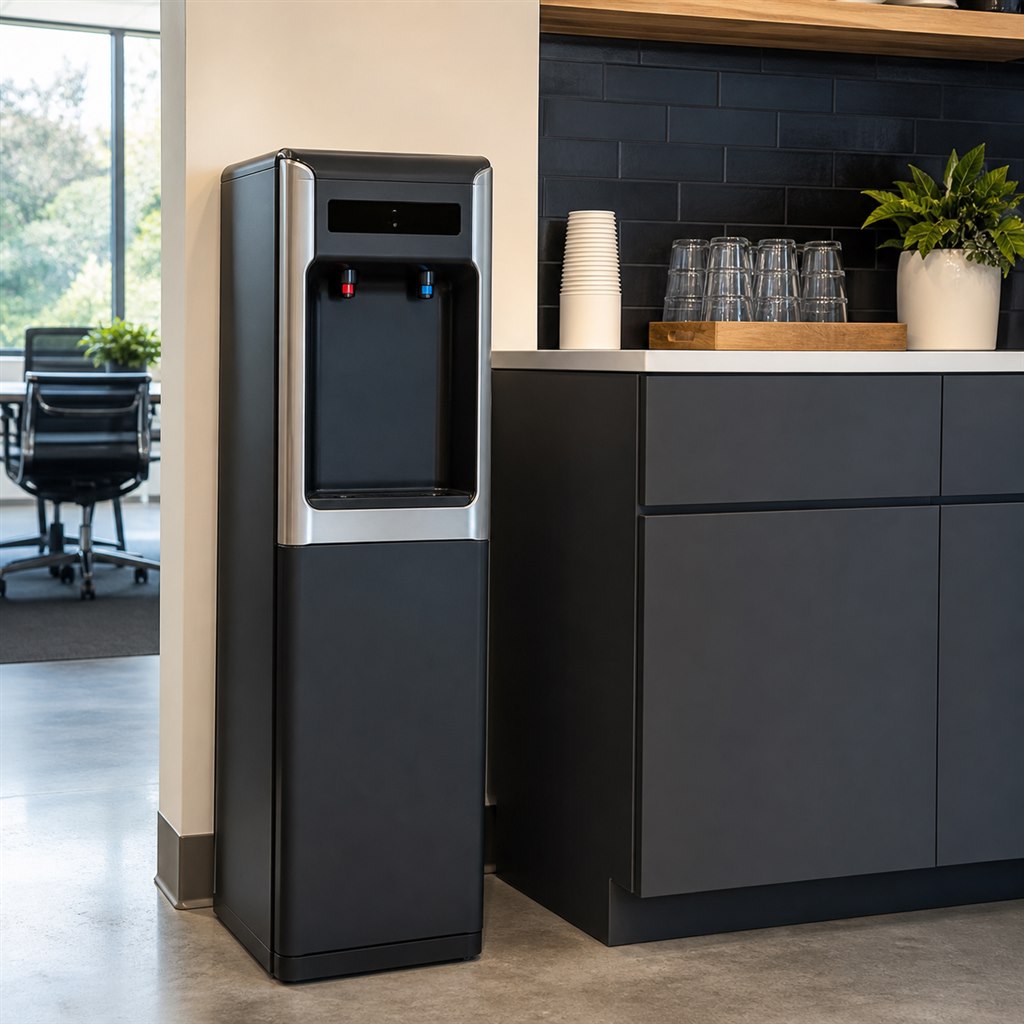
Both formats can work well. The practical difference is how water reaches the dispenser and what the workplace must store, connect and maintain.
Sealed bottles are delivered on a schedule and used with a cooler. This avoids a permanent water-line connection but requires storage for full and empty bottles plus safe bottle handling.
A dispenser connects to the building water supply and filters water at the point of use. It removes bottle storage and lifting but requires a suitable water connection, installation plan and filter schedule.
Compact point-of-use equipment can work where floor space is limited. Confirm counter dimensions, electrical service, water access, drain requirements and clearance for filter changes.
Do not choose a treatment label by name alone. Ask what the system is designed to reduce, how performance is documented and how often filters must be changed under your actual usage.
Carbon and multi-stage filters may improve taste and odor and reduce selected substances. Results depend on the filter specification, source water and timely replacement.
Reverse-osmosis systems use a membrane and may be appropriate when broader reduction is desired. They require adequate water pressure, maintenance and a plan for reject water.
Bottled programs may offer different water types and package sizes. Compare source information, handling, bottle deposits, delivery terms and storage requirements.
Pricing depends on equipment, estimated consumption, water format, filtration, installation, delivery frequency, maintenance and contract terms. A quote that looks inexpensive may exclude installation, bottle deposits, delivery surcharges or filter changes.
Ask providers to quote the same headcount, number of stations, service format and expected monthly use. That makes the comparison more useful than looking at a single monthly number.
| Cost factor | What to compare |
|---|---|
| Equipment | Rental, purchase, installation and replacement terms |
| Water and filters | Bottle quantity, filter type, capacity and replacement schedule |
| Delivery | Visit frequency, minimums, deposits and fuel or route surcharges |
| Service | Sanitation, preventive care, repairs and response expectations |

Good equipment is only part of the decision. The program must stay clean, supplied and supported after installation.
Confirm station locations, plumbing, power, floor protection, delivery access, bottle storage and employee circulation before finalizing equipment.
Get filter changes, sanitation, preventive maintenance, routine cleaning and emergency repairs in writing. Know which tasks remain with your staff.
Review term length, renewal, cancellation, price-change procedures, delivery adjustments and the support process when equipment is unavailable.
Neither is automatically better. Bottled service avoids a water-line connection but needs storage and lifting. Bottleless service reduces bottle handling but requires suitable plumbing, filtration and installation.
Plan around attendance, shifts, walking distance, floor layout and peak demand. Larger or multi-floor locations may need several stations even when one unit could technically serve the total headcount.
That depends on the agreement. Ask for the exact filter schedule, sanitation scope and daily cleaning responsibilities before service begins.
Many dispensers provide hot water for tea, cocoa and other beverages. Confirm temperature, recovery capacity and safety controls for the intended workplace.
Yes. Vending National is headquartered in Camden, New Jersey and supports workplace refreshment programs nationally. Available equipment and service details depend on the location.
Share your location, daily attendance, preferred bottled or bottleless format, available utilities and current water use to compare practical workplace options.
Get Office Water Service Quotes