Bottled and bottleless office water service solve the same basic problem in different ways. Bottled programs bring sealed containers to the workplace. Bottleless, or point-of-use, systems connect to the building water supply and filter water at the dispenser. The better option depends on the site, not a universal claim that one format is always cleaner, cheaper or easier.
We usually start with four questions: Is a suitable water connection available? Where would full and empty bottles be stored? How much water is used during the busiest part of the day? Who is responsible for routine cleaning and service? Those answers narrow the choice quickly.
How bottled delivery works
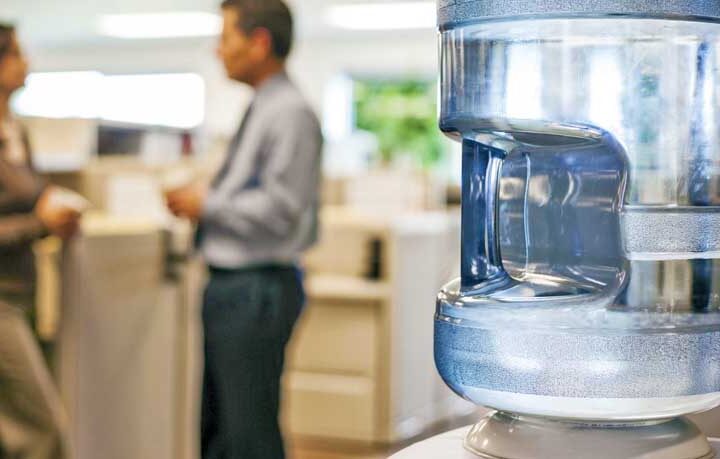
A bottled service delivers full water jugs on a planned schedule and collects empties. The cooler may provide cold, room-temperature and hot water. Because the supply is self-contained, installation can be simpler where plumbing is not practical.
The workplace needs secure storage that does not block circulation or expose bottles to heat and direct sunlight. Someone must replace bottles safely or choose bottom-loading equipment that reduces lifting. Delivery access also matters. A Jersey City office several floors above a restricted loading area has different route requirements from a Camden warehouse with a ground-level receiving door.
How bottleless point-of-use service works
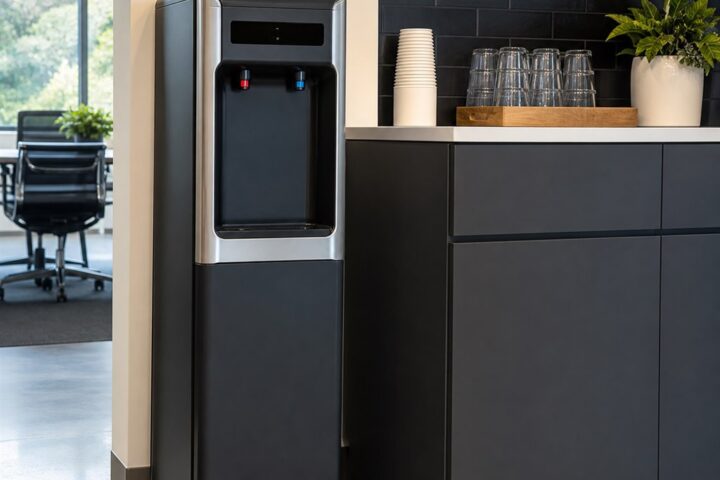
A bottleless cooler connects to the building water line. Filters are installed in or near the equipment and changed on a defined schedule. This removes jug storage and repeated bottle handling, which can be valuable in a busy office or facility using significant volume.
Installation requires more planning. Confirm water pressure, connection location, electrical service, drainage if required and a route for tubing that is protected from damage. The dispenser must remain accessible for filter changes and sanitation.
Compare water quality claims carefully
“Filtered,” “purified,” “spring” and “reverse osmosis” describe different sources or treatment approaches, but the label alone does not tell you how a program will perform. Ask bottled suppliers for source and treatment information. Ask point-of-use providers which filter is used, what it is certified to reduce and when it will be replaced.
Local source-water conditions and employee taste preferences matter. A site review can determine whether basic taste-and-odor filtration is appropriate or whether a more involved treatment system should be considered.
Storage, lifting and safety
Bottled programs require space for inventory between deliveries. Too little storage causes emergency deliveries; too much ties up floor area and can lead to poor rotation. Replacing top-loading bottles involves lifting a heavy container above waist level, so the task should be assigned thoughtfully.
Bottleless systems avoid that recurring lift but introduce tubing and filter maintenance. Poorly planned lines can be damaged by carts or cleaning equipment. Use professional installation and confirm how leaks are detected and handled.
Capacity and peak demand
Look beyond the number of employees. A cooler serving steady office traffic behaves differently from one serving a scheduled production break. Ask about cold-water storage, cooling recovery and hot-water capacity if tea or other beverages are expected.
Large or multi-floor workplaces may need more than one station. Short walking distances encourage use and reduce queues. Multiple smaller stations can also provide redundancy when one unit requires service.
Maintenance and sanitation
Both formats require regular cleaning. The agreement should identify dispenser sanitation, drip-tray care, exterior wiping, bottle-contact procedures and filter replacement. Do not assume a provider visit covers every daily task.
Ask how service is documented and what happens after a leak, loss of cooling or unusual taste complaint. A clear response process matters more than vague “maintenance included” language.
How to compare cost
Bottled service cost usually changes with consumption, bottle size, delivery frequency, deposits and route fees. Bottleless service may include installation, monthly equipment charges, filters and maintenance. Compare the total annual scope rather than one bottle price or cooler rental.
Include staff time and space. Bottle handling, inventory checks and storage have operational value even when they are not invoice lines. Bottleless service can reduce those tasks, but plumbing work and filter care must be included.
Frequently asked questions
Is bottleless water service cheaper?
It can be for some higher-volume locations, but installation, equipment and filters matter. Compare the complete program using expected consumption.
Does a bottleless cooler work without plumbing?
No. A point-of-use system needs a suitable water connection. Bottled equipment may be better where plumbing is unavailable.
Who changes point-of-use filters?
The service agreement should specify the provider, schedule and filter type. Ask how replacement is documented.
Can one office use both formats?
Yes. A main breakroom may use point-of-use equipment while a remote area uses bottled delivery. Coordinate maintenance and billing carefully.
Compare bottled and bottleless office water service options based on your building, team and daily use.