Coffee proposals are difficult to compare when every provider receives a different description of the workplace. One quotes a batch brewer, another assumes single-cup equipment, and a third leaves supplies outside the price.
A short, consistent RFP creates useful competition. It does not need procurement jargon; it needs accurate attendance, clear service expectations and a list of costs every provider must disclose.
Describe attendance and demand
Provide typical attendance by weekday, shifts, visitors and peak meeting patterns. Payroll headcount alone overstates many hybrid offices.
Estimate current servings or share recent order history. State whether employees queue at the same time or drink throughout the day.
Specify outcomes before equipment
Explain desired speed, drink variety, quality and employee experience. Let providers recommend equipment, but require model names and capacity.
Ask how equipment can be changed if usage differs from estimates. An attractive brewer is not a solution if it cannot handle the morning rush.
List products and service responsibilities
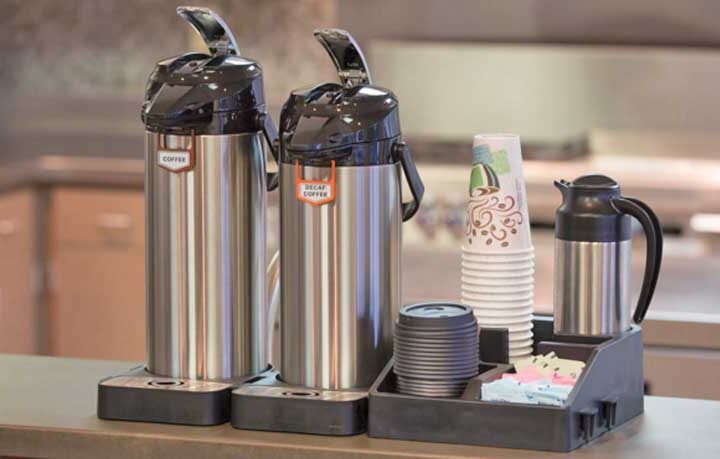
Identify regular, decaf, tea, cocoa, creamers, cups and condiments. State any brand, sustainability or dietary requirements.
Clarify delivery, inventory, cleaning, filter changes and repair response. Require exceptions to be written.
Compare complete cost and terms
Request equipment rental, product prices, installation, delivery, service fees and minimum purchases. Ask how price changes are communicated.
Review term, renewal, cancellation, equipment removal and damage clauses. A low initial quote can become expensive when scope is missing.
Questions to include in every proposal
- Attendance by day and peak demand
- Equipment models and throughput
- Included products and unit prices
- Delivery and inventory method
- Cleaning, filtration and repairs
- Contract term and price-change process
Frequently asked questions
How many providers should receive an RFP?
Enough to compare service approaches without creating an unmanageable review. Three qualified proposals is often useful.
Should brands be mandatory?
Set must-have requirements sparingly so providers can offer practical alternatives.
How should proposals be scored?
Weight service, equipment fit, products, complete cost and contract terms—not price alone.
Can a site visit happen before pricing?
It should when plumbing, access or unusual demand affects the recommendation.
Use the coffee service form to start a comparison with consistent workplace information.