Full-service vending quotes can differ in product prices, stocking schedules, maintenance, employer subsidies and minimum sales requirements. Compare the complete service each provider will deliver, rather than judging by one headline number.
Start by defining what you want the vending company to do. Equipment, delivery, stocking, cashless payments, product waste, cleaning and repair all have a cost even when they do not appear as separate line items. A useful proposal assigns those responsibilities clearly.
Identify the commercial model first
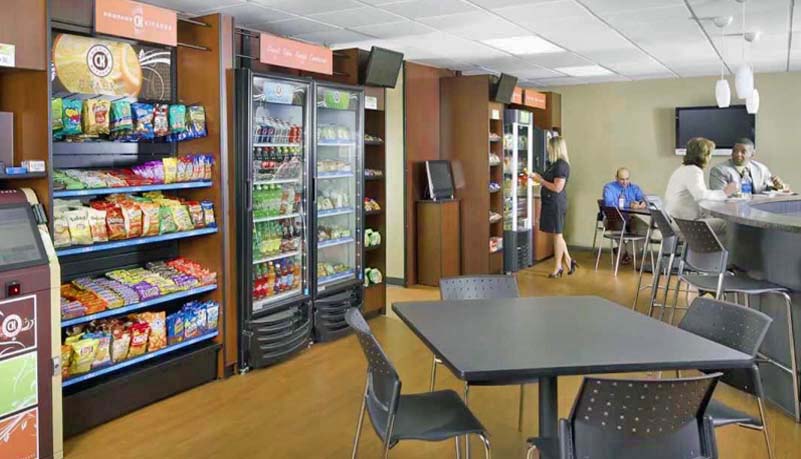
Full-service vending companies supply their machines, stock the products and handle maintenance. Programs may be funded through product sales or include employer subsidies and service fees. Provider-managed micro markets can also introduce shelving, coolers and checkout kiosks.
Ask each provider to explain the full-service scope in plain language. Confirm that its proposal includes provider-supplied machines, product replenishment and maintenance, along with any service fees or employer subsidy.
Equipment affects more than the payment
Machine capacity, refrigeration, merchandising space, accessibility, energy use and payment hardware affect price. A basic snack machine is not equivalent to a glass-front beverage machine, refrigerated food unit or combination machine. Refurbished equipment may be a sensible value when its condition, warranty and parts support are documented.
Confirm freight, delivery, placement and removal. Tight hallways, stairs, loading restrictions and long indoor moves can change installation requirements. Electrical work is usually a separate building responsibility unless the proposal states otherwise.
Compare the product prices employees will actually pay
In managed vending, the workplace may pay little or nothing directly while employees fund the program through purchases. That makes shelf pricing part of the proposal. Ask for representative prices on water, soda, energy drinks, chips, candy, protein snacks and fresh food if offered.
Do not judge a provider by one inexpensive item. Look at the overall basket and ask how price changes are communicated. A provider should also explain whether taxes, bottle deposits or cashless surcharges are reflected in displayed prices.
Payment technology and fees
Card readers and mobile wallets improve convenience, but transactions involve connectivity and processing. Ask whether fees are built into product prices, added to small purchases or charged to the workplace. Confirm what happens when connectivity is lost and how refunds are handled.
Ask your full-service provider how it manages payment processing and transaction data. Confirm whether any connectivity or processing charges affect the workplace or employee product prices.
Minimum sales, subsidies and commissions
A route operator needs enough sales to cover equipment, inventory, delivery labor and service. Low-volume locations may be offered fewer machines, less frequent visits or a subsidy arrangement. That is not automatically a bad deal; it is better than a provider promising full service and quietly allowing the program to deteriorate.
Commission offers should be evaluated after product prices and service standards. A higher commission can be offset by higher employee prices or reduced investment. Ask what sales figure the commission uses, when it is paid and whether taxes or processing fees are deducted first.
Service frequency and stock performance
“Weekly service” does not guarantee the right products will be available. Ask how the provider detects low inventory, handles sellouts and adjusts the mix. Remote monitoring can help, but route decisions and accurate loading still matter.
Give realistic attendance. A headquarters with 200 employees on payroll may only have 85 people present on a typical Tuesday. Conversely, a 90-person operation running three shifts can create nearly continuous demand. Accurate use patterns produce better equipment and route assumptions.
A practical proposal comparison sheet
- Full-service scope: provider installation, stocking and maintenance
- Machine type, age, capacity and warranty
- Installation, electrical and removal responsibilities
- Representative employee product prices
- Cashless hardware, connectivity and processing fees
- Restocking frequency and sellout response
- Cleaning, preventive maintenance and repair response
- Minimum sales, subsidy, commission and termination terms
Use the same sheet for every supplier and note unanswered questions. If a proposal relies on verbal assurances, ask for them to be added to the agreement. Our guide to choosing a workplace vending company provides a broader service-quality checklist.
Frequently asked questions
Are workplace vending machines free?
Some full-service programs place equipment without a separate placement charge when expected sales support the service. That does not mean every location qualifies or that the program has no costs.
Why do two vending quotes look completely different?
They may use different ownership, service, product-pricing or volume assumptions. Normalize the responsibilities and expected sales before comparing totals.
Should we choose the lowest product prices?
Price matters, but availability, freshness, equipment reliability and service frequency also shape employee value. Compare a representative basket rather than one item.
What information improves quote accuracy?
Provide the address, attendance by shift, operating hours, customer access, desired products, machine locations, payment preferences and current sales if available.
To compare full-service vending quotes using a consistent scope, review Vending National’s vending service solutions and submit your workplace details.