A vending installation should feel uneventful. The machines arrive, clear the doors, reach the planned location and start serving employees. When it turns into a scramble, the problem is usually something ordinary that nobody checked: a narrow doorway, a missing outlet, a loading dock restriction or poor cellular reception for the card reader.
We use a pre-installation review because a ten-minute measurement is cheaper than rescheduling a truck and crew. This checklist gives workplace buyers the same practical questions to settle before delivery day.
Confirm the delivery route, not just the final space
Measure every part of the path from the truck to the breakroom: exterior doors, vestibules, elevators, hallway turns and the final doorway. Note thresholds, stairs, slopes and flooring that needs protection. A machine may fit the wall perfectly and still be impossible to turn through a tight corridor.
Tell the provider about loading-dock hours, certificates of insurance, freight-elevator reservations and security check-in. In older New Jersey buildings, we often find that a side entrance is more practical than the front lobby, but only if the property manager approves it in advance.
Choose the space around employee traffic
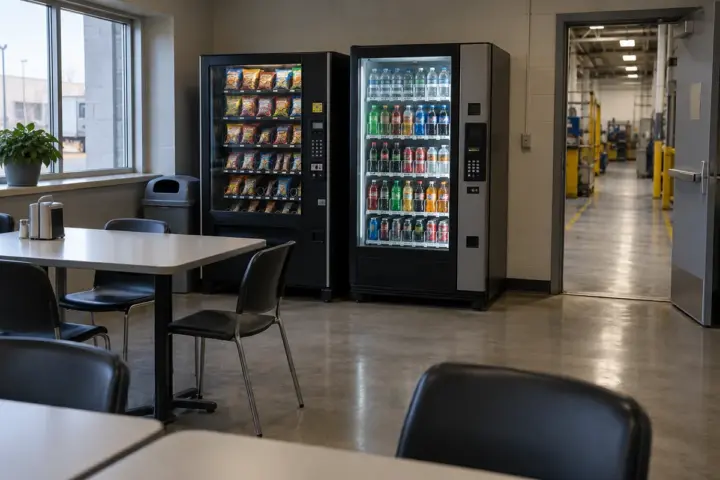
Place machines where employees naturally take breaks without blocking exits or creating a line in a production aisle. Leave room for doors to open, products to be loaded and a technician to reach service panels. Avoid direct sun, exterior moisture and locations beside equipment that throws heat.
Think about peak use rather than average traffic. A warehouse with a synchronized 15-minute break needs more open floor area than an office where people arrive gradually. If several machines are planned, decide whether one straight bank or two smaller stations gives people better access.
Verify power and connectivity
Confirm the voltage, outlet type and circuit requirements for the exact equipment. Do not assume an extension cord or shared power strip is acceptable. Refrigerated machines draw more power during compressor startup, and a microwave or refrigerator on the same circuit can create nuisance trips.
Cashless readers also need dependable communication. Ask whether the system uses cellular, Wi-Fi or a wired connection, then test reception at the planned location. A reader that works near the front door may struggle in a concrete breakroom or below-grade employee area.
Set expectations for products and pricing
Before delivery, approve the opening product mix, visible prices and any employer subsidy. Give the provider attendance by shift, not just total payroll. Include dietary requests, beverage preferences and whether the workplace already provides free coffee or water, because those details change demand.
Decide who can request changes after launch. One contact should collect employee feedback and separate a real pattern from a single request. The first assortment is a starting point; sales data should guide adjustments after several service cycles.
Plan installation-day responsibilities
- Confirm arrival window and on-site contact
- Reserve the dock, elevator and parking area
- Clear the route and protect finished floors
- Verify outlets and network or cellular access
- Review machine placement before final leveling
- Test cooling, payment readers and product delivery
- Post refund and service contact information
Photograph the completed setup and record serial numbers. Ask the installer to demonstrate basic customer functions and explain what employees should do after a failed vend. Those small details reduce confusion during the first week.
Frequently asked questions
How much space should be left around a vending machine?
The exact clearance depends on the model and service access. Allow room for ventilation, door swing, restocking and safe customer movement, then confirm the manufacturer’s requirements.
Who provides the electrical outlet?
The workplace or property owner normally provides compliant power. The vending proposal should identify the required voltage and circuit before installation.
Can vending machines be installed upstairs?
Yes when the elevator, floor loading, door clearances and delivery route support the equipment. Confirm those conditions before scheduling the truck.
How soon should installation planning begin?
Start as soon as equipment is selected. Property approvals, electrical work and elevator reservations can take longer than the actual delivery.
For a smoother launch, request vending service quotes with photos, measurements and building requirements included from the beginning.