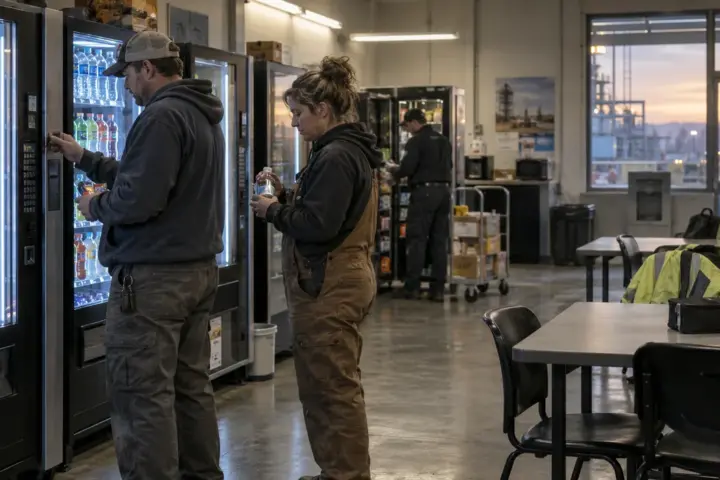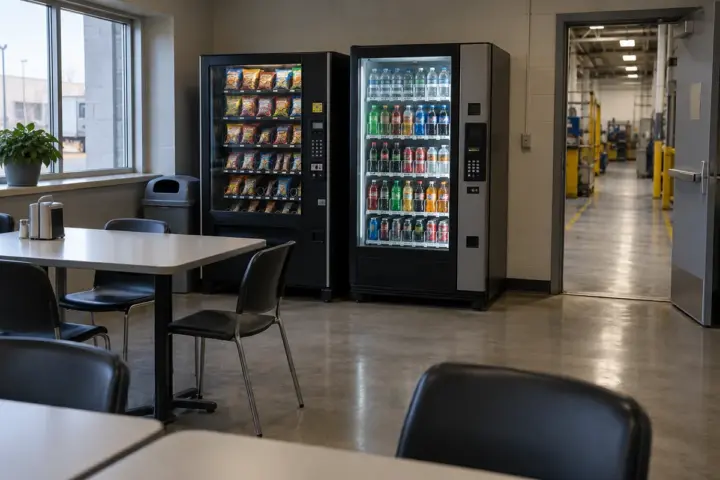
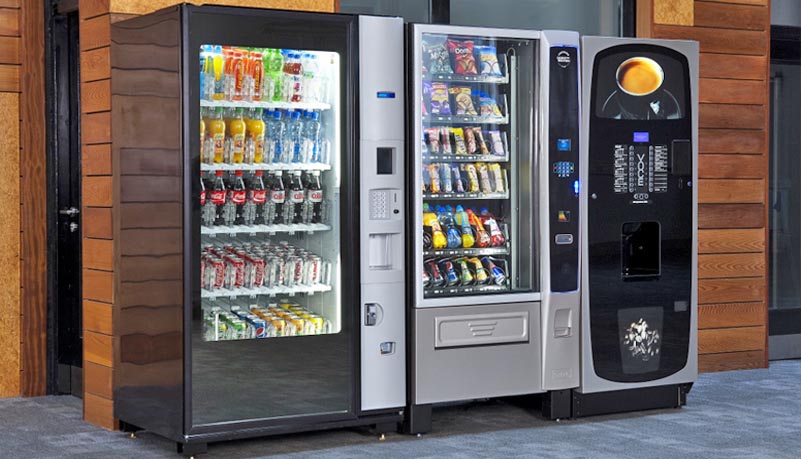
A full-service vending program gives your workplace convenient access to snacks and drinks. The vending provider brings in its machines, keeps them stocked, manages product dates and handles repairs. Compare providers by the service they deliver and the needs of your team.
In a full-service arrangement, the vending company supplies the equipment, works with you on the product mix, restocks the machines and handles technical service. Your workplace receives a managed vending service without taking on daily stocking or machine upkeep.
What full-service vending normally covers
A managed program is designed for workplaces that want the result—reliable access to drinks, snacks or fresh food—without operating the machines internally. The provider monitors sales, adjusts inventory, schedules replenishment, rotates dated products, processes cashless payments and responds when equipment fails.
That does not mean every full-service proposal is identical. Some providers require a minimum population or sales level. Product prices, commission arrangements, service frequency and equipment upgrades can vary. Ask what happens if actual usage is lower than projected. A proposal should explain whether the provider will change the machine mix, reduce visits, move equipment or require a subsidy.
Regular stocking and product rotation
Your provider buys and loads products, checks expiration dates and adjusts the mix to match demand. Ask how often the machines will be replenished and how employees can report empty selections or request different products.
Compare the complete service included in each proposal: installation, replenishment, product rotation, payment support and repairs. A clear stocking schedule and response process help keep the machines useful throughout the working week.
Ownership, service and repair questions
The provider supplies its machines as part of the service. Confirm the agreement term, removal conditions and responsibility for damage, including what happens if sales do not support the route.
Service language should be specific. “Maintenance included” may cover mechanical failures but not damage, cleaning, payment-system connectivity or product jams caused by incorrect loading. Ask how service calls are submitted, which hours are covered and whether a replacement machine is available after an extended outage.
Product control and employee experience
A good full-service provider should be willing to discuss employee preferences, dietary needs, price sensitivity and the balance between familiar brands and healthier choices. The provider still needs enough flexibility to remove products that do not sell.
A Camden distribution center with overnight staffing will behave differently from a professional office in Cherry Hill. Shift coverage, break length and access to nearby stores affect demand. Give providers actual attendance by shift instead of the number on payroll, and describe seasonal changes or hybrid schedules that can distort average use.
Payment systems and reporting
Ask your vending provider about card readers, mobile wallets, transaction fees, connectivity and reporting. The provider manages the payment system as part of the service; confirm the supported methods and any charges in its proposal.
If reporting matters, ask to see a sample. Useful reports show sales by machine and product, service history and inventory trends. A dashboard is not valuable if nobody reviews it or if the data cannot be exported for the people making product decisions.
How to compare proposals fairly
Create one written scope before requesting prices. Include location, access hours, employee count by shift, visitors, desired machine types, cashless requirements, expected product categories and available electrical service. Ask every company to state what is included, what is optional and which assumptions could change the arrangement.
- Equipment ownership, term and removal conditions
- Installation, freight and electrical responsibilities
- Restocking schedule and out-of-stock response
- Product selection and price-change process
- Payment technology and transaction fees
- Cleaning, preventive maintenance and repair coverage
- Minimum sales, subsidy or commission requirements
For a broader cost review, read what determines workplace vending service cost. Use the same service scope for every proposal so you can compare stocking, maintenance, product choices and terms fairly.
Frequently asked questions
Do full-service vending companies charge a monthly fee?
Some programs are supported by product sales, while others use service fees, subsidies or minimum-volume terms. The location, headcount, shifts and product plan affect the structure.
Who stocks and maintains the machines?
The full-service vending provider supplies the machines and handles inventory, replenishment, product rotation, payments and maintenance. Confirm the schedule and service response in your proposal.
Which option works better for a small office?
It depends on expected use, headcount and provider coverage. Ask a full-service provider to assess your workplace and explain any minimum sales requirements or employer subsidy.
Can the arrangement change as the workplace grows?
Often, but the contract should explain equipment changes, additional locations and early replacement. Discuss growth before signing rather than assuming an upgrade will be free.
Ready to find a provider that installs, stocks and maintains vending machines for your team? Explore workplace vending service and request pricing based on your location, staffing pattern and preferred level of support.