There is no single workplace vending service price because companies are not all buying the same thing. One proposal may be a full-service program where the operator installs, stocks and maintains the machines. Another may be an equipment lease that leaves product purchasing and daily management to the workplace. A third may combine employer-paid snacks with employee-paid beverages.
The first job is to define the arrangement. Otherwise a low number can look attractive simply because important work has been left out.
Full-service vending and equipment leasing are different
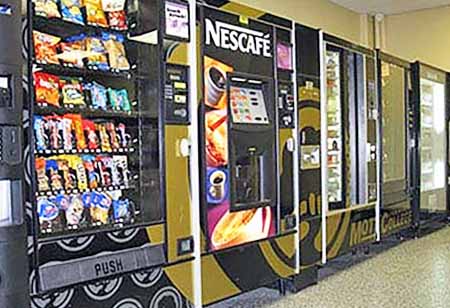
In a full-service program, the vending operator typically earns revenue from product sales and manages stocking and routine machine service. Whether a location qualifies depends on expected use, service route economics, access and product mix. A machine is not automatically “free”; its cost and service are supported by the program’s economics.
With a lease or purchase, the workplace has more control but also more responsibility. Someone must buy inventory, load products, manage expiration dates, collect or reconcile payments and arrange repairs. That can make sense for a smaller site or a location wanting an employer-paid benefit, but the labor belongs in the comparison.
Headcount is only a starting point
Providers consider the number of potential users, shifts, days of operation and whether employees have easy alternatives nearby. A manufacturing location with 80 people across long shifts may generate more demand than a hybrid office with 150 assigned employees but only 45 present on a typical day.
Share actual attendance and peak periods. Inflating headcount may produce the wrong equipment and unrealistic stocking plan. Understating it can lead to empty shelves and poor service.
Product mix changes both cost and service
Packaged snacks and bottled drinks are generally simpler to manage than fresh sandwiches, salads and dairy products. Fresh food can greatly improve the breakroom, but it requires refrigeration, closer inventory rotation and enough volume to limit waste. Healthy products are not one uniform category either; shelf life and wholesale cost vary widely.
If an employer subsidizes products, define the rules. Some companies cover everything, some provide a monthly allowance and others subsidize only selected items. The payment system and reporting should support the policy without creating a manual accounting job.
Equipment and payment technology matter
Machine capacity, refrigeration, card readers, mobile payment, telemetry and remote inventory reporting can affect the proposal. Modern payment options are important in many workplaces, but transaction and connectivity terms should be clear. Ask who owns the reader, who pays processing fees and how refunds are handled.
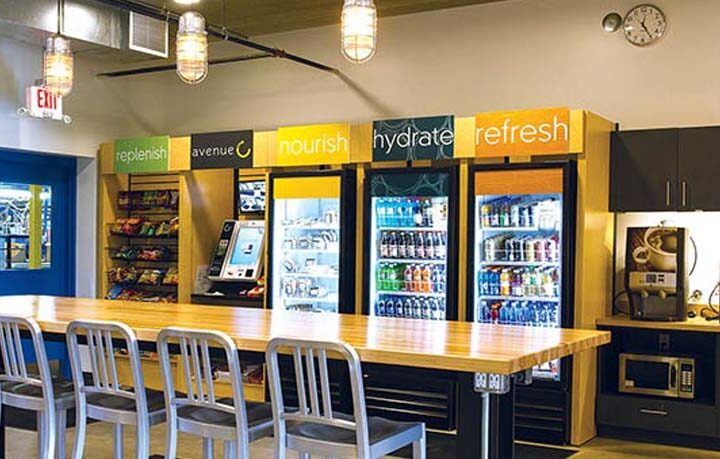
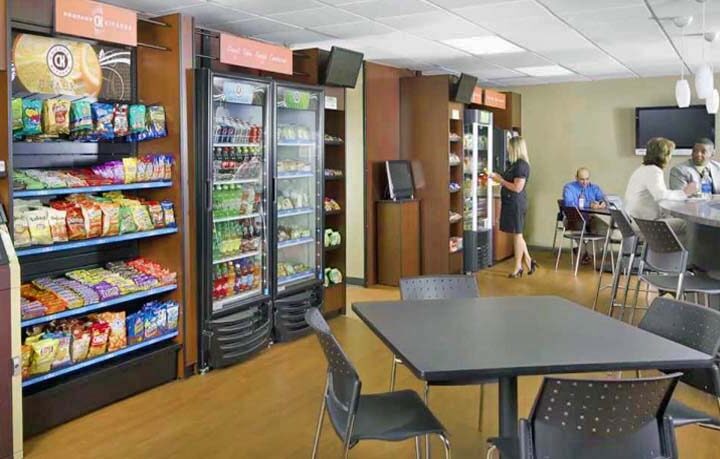
For a micro market, include kiosks, coolers, shelving, security considerations and the space needed for customers to browse. Compare that complete layout with traditional vending-machine leasing options, not just the equipment count.
Delivery and service frequency affect the economics
A route stop has labor and travel behind it. Locations needing frequent small deliveries may be more expensive to serve than locations with enough storage and predictable volume. Access restrictions, loading docks, stairs, parking and secure entry can also affect the service plan.
New Jersey workplaces illustrate this well. A suburban Mount Laurel office with easy loading access is a different service stop from a dense Jersey City building with timed freight-elevator access. Neither is inherently a problem, but the proposal should reflect the real visit.
Ask what is included and excluded
- Machine delivery, installation and removal
- Initial product fill and regular restocking
- Preventive maintenance and emergency repairs
- Card readers, connectivity and transaction fees
- Refund handling and customer support
- Product spoilage, shrink and market security
- Utility, space and access responsibilities
- Contract length, renewal and early termination
Compare the delivered program and internal labor, not just a monthly charge. The best value is the arrangement that stays stocked, works reliably and requires an appropriate amount of management from your team.
Frequently asked questions
Can a business receive full-service vending without buying machines?
Sometimes. Qualification depends on location, expected sales and provider requirements. Ask what volume and service terms apply.
Who pays for electricity?
The workplace commonly supplies power, but the agreement should state all facility responsibilities.
Are product prices fixed?
Not always. Ask how prices are set, how increases are communicated and whether employer subsidies can be applied.
Review vending service FAQs, check national service coverage and compare workplace vending service prices.