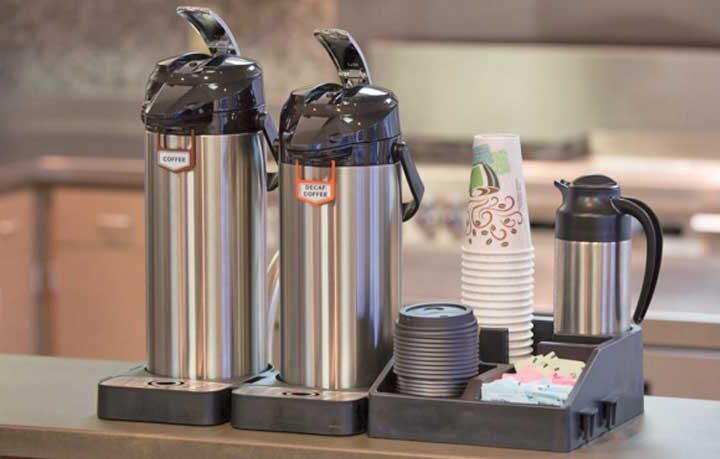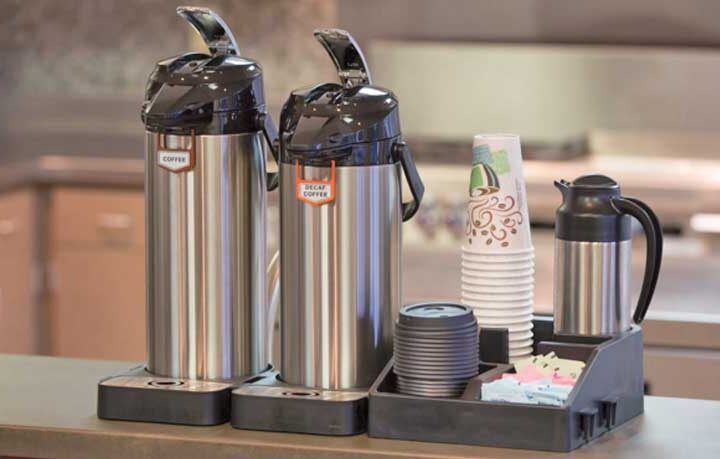
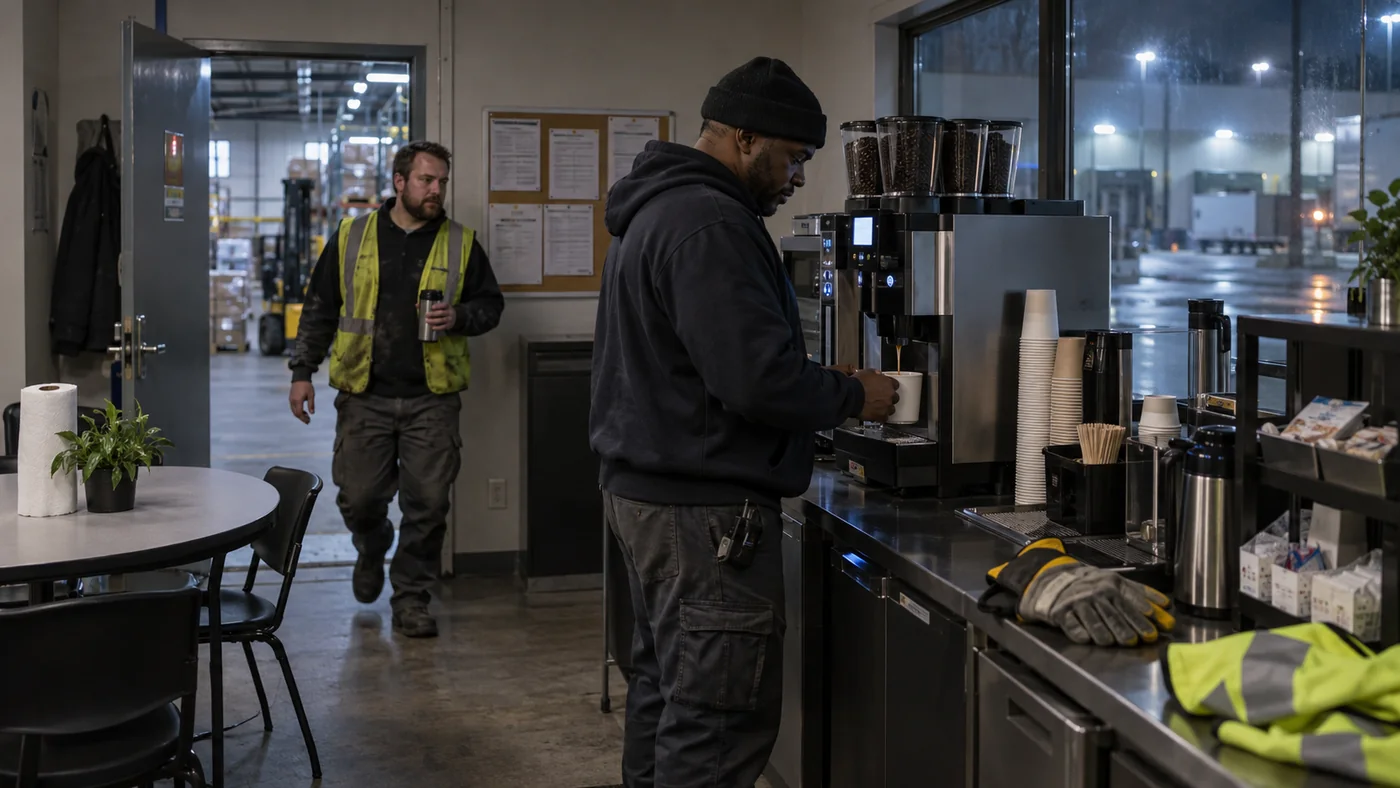
Warehouse teams often start early, work late and take shorter scheduled breaks than a conventional office staff. A well-planned office coffee service for warehouses should keep equipment, coffee and supplies ready across those shifts without making a supervisor manage daily restocking. See current office coffee prices.
Size the coffee program to shift demand
Tell providers how many people are present by shift, when breaks occur and whether the coffee station serves drivers, visitors or office staff as well as the floor team. A single small brewer may create a queue during a common break, while oversized equipment can waste product and counter space. Ask for the reasoning behind the recommended brewer type and capacity. See current office coffee prices.
Location matters too. Choose a stable counter near water and appropriate electrical service, with room for cups, condiments and waste. Keep the station away from forklift lanes, dusty work areas and places where a spill could create a safety concern. The provider should confirm installation requirements before equipment arrives.
Define restocking and cleaning responsibilities
Full service should be specific. Ask who replenishes coffee, cups, sweeteners, creamers and filters; who performs deeper equipment cleaning; and what employees are expected to do between service visits. A practical plan also covers descaling, water filtration, spills and the replacement of worn parts.
- Estimate cups by shift instead of total payroll.
- List regular and decaffeinated demand.
- Discuss single-cup versus batch brewing.
- Confirm secure access for service visits.
- Set a process for urgent supply shortages.
The workplace refreshment FAQs can help frame questions about provider coverage and service expectations.
Coordinate coffee with vending and water
A break room works better when services complement one another. Full-service vending prices may include snacks, cold drinks or fresh food for shifts that can’t easily leave the site. Office water service can support coffee quality and provide a separate hydration option. Ask whether combined service changes route frequency, billing or minimum requirements.
What should warehouse managers compare?
Compare the equipment supplied, product choices, expected monthly cost, service frequency, repair response and agreement terms. Ask how the program will be adjusted if headcount or shift patterns change. Product price alone won’t show whether the provider can keep the station useful through an entire operating week.
Review available service areas, then request warehouse coffee and vending prices with your shift counts, access rules and current break-room setup. That gives providers enough detail to propose a service plan employees can actually use.