Reliable machines are a basic part of full-service workplace vending. When a bill acceptor jams, a card reader stops responding or a refrigerated machine warms up, employees need a clear way to report the problem and the workplace needs to know who is responsible for the repair. See current vending service prices.
Separate routine service from equipment repair
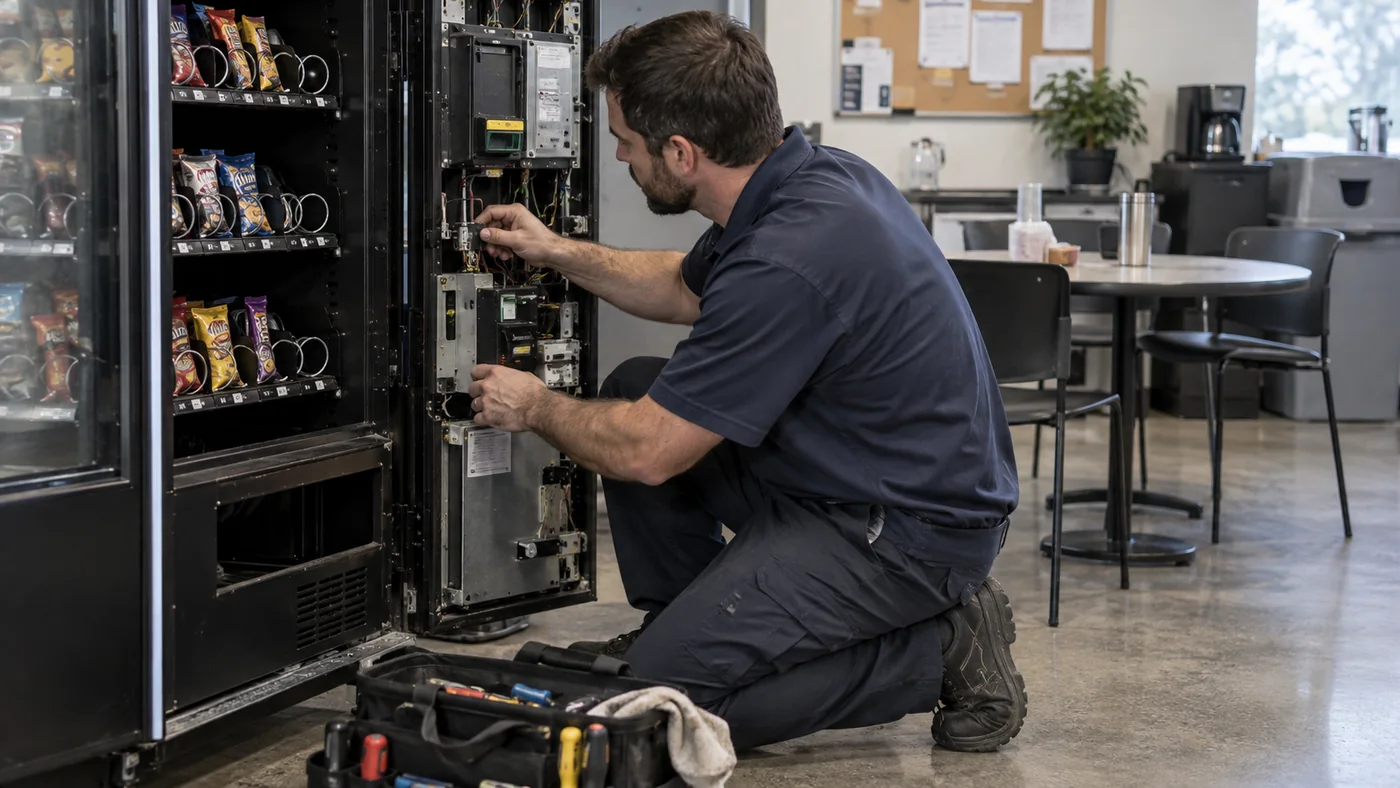
Restocking and maintenance are related, but they aren’t identical. A route visit may refill products, remove expired items and clean customer-touch areas. A repair visit may require a trained technician, replacement parts or a machine swap. Ask the provider to explain both processes before installation. See current vending service prices.
In a provider-managed arrangement, the provider generally owns or controls the vending equipment and handles normal service. The written agreement should still identify exclusions, response expectations and any circumstances that could create a charge for the workplace. Never rely on a verbal promise that every issue is covered.
Ask how employees report a problem
A useful reporting process should capture the machine location, the failed product or payment, the time and enough detail to reproduce the problem. If several machines are on one campus, label each location clearly. Confirm how cashless-payment disputes and refund requests are handled without requiring the workplace manager to become the middleman.
- Who receives repair requests?
- Is support available outside daytime hours?
- What response is expected for refrigeration failures?
- Who removes spoiled or damaged products?
- When will a machine be replaced instead of repaired?
Use the workplace vending FAQs to organize other questions about equipment and service before comparing providers.
Prioritize problems that affect safety or product quality
A cosmetic issue isn’t the same as a cooling failure. Report water leaks, electrical damage, unstable equipment and temperature problems promptly, and keep employees away from equipment that appears unsafe. The provider should explain its escalation process and how it protects refrigerated products while a repair is pending.
If the break room also includes commercial coffee equipment or office water service, ask whether those systems follow the same service channel or separate agreements. One contact can be convenient, but only when responsibilities are clearly defined.
What should you compare besides repair speed?
Consider preventive maintenance, route communication, parts availability, equipment age, refund handling and the provider’s ability to adjust capacity. Check local vending coverage, because service quality depends on an operator being able to reach the facility.
When requesting vending service prices, describe the number and type of machines, operating hours and any secure-access requirements. Ask each provider to state maintenance and repair duties in writing. The best comparison is the total service arrangement, not merely the appearance of the machines on installation day.